It is possible to commit no mistakes and still lose. That is not a weakness. That is life.

  • Post author:

Have you ever tried your best and done everything in the most perfect way possible, but it still all falls apart?

For example, think about planning a party. You can order decor, plan the food, agonize over every tiny detail as much as you can, and invite all the guests. It could all be perfectly planned. But things can still go wrong. The guests show up late, there is a fire in the house next door, and the power goes out. Even if you don’t make a single mistake, it doesn’t guarantee anything. It’s just another plot twist in our lives.

We have seen this even more clearly in recent times with the pandemic. Many of us had life plans all laid out that completely got destroyed, at no fault of our own. Life happens, and we cannot predict what the next moment will bring us.

Here are some things to remember about life.

1. Life isn’t always fair. One of the most important and helpful lessons to remember about life is that it is not always fair. Some of us have grown up in more difficult situations than others. Everyone has a different set of challenges that they are born with.

And these challenges will continue throughout our lives. Someone might get into the college you wanted. Someone might try less for a job and still get it. Or maybe someone just eats the last cookie in the cookie jar!

While this can feel discouraging and pessimistic, it can actually help us move forward if we let it. It is a lesson of acceptance. When we accept that life is not always fair, we can try to deal with the situation logically and most effectively, rather than getting stuck in burdening questions like “why me?”.

2. Chase success even when you fail. Failure can be hard. No one enjoys losing, especially when they made no mistakes. But that does not mean we shouldn’t try anymore. True failure is only when we give up, because there is always another chance for success. So don’t give up. Remember, failures and losses are just part of life. Continue persevering!

3. Mistakes will be made. Even though it is true that if you don’t make a single mistake, it is still possible to lose, it’s also important to remember another truth: mistakes will be made. At the end of the day, we are all human. We will mess up from time to time.

We might say the wrong thing at the wrong time or send a personal text to the wrong person after a tiring day. We might forget an anniversary or a birthday. We might not get as good grades on the test we hoped. We will make mistakes, and it is important to remember that while also showing ourselves compassion.

So, remember, be kind and gentle with yourself the next time you make a mistake.

The truth is, the universe is immensely complex, and life reflects that. We cannot account for everything no matter how hard we try. It’s important to accept that sometimes even when we try our best, stay dedicated, and make no mistakes, we might lose. Life throws us curveballs. It’s our choice, however, to decide to give up or not. We decide if we take it as a lesson and experience and try again, or to take it as a failure and a weakness.

Continue ReadingIt is possible to commit no mistakes and still lose. That is not a weakness. That is life.

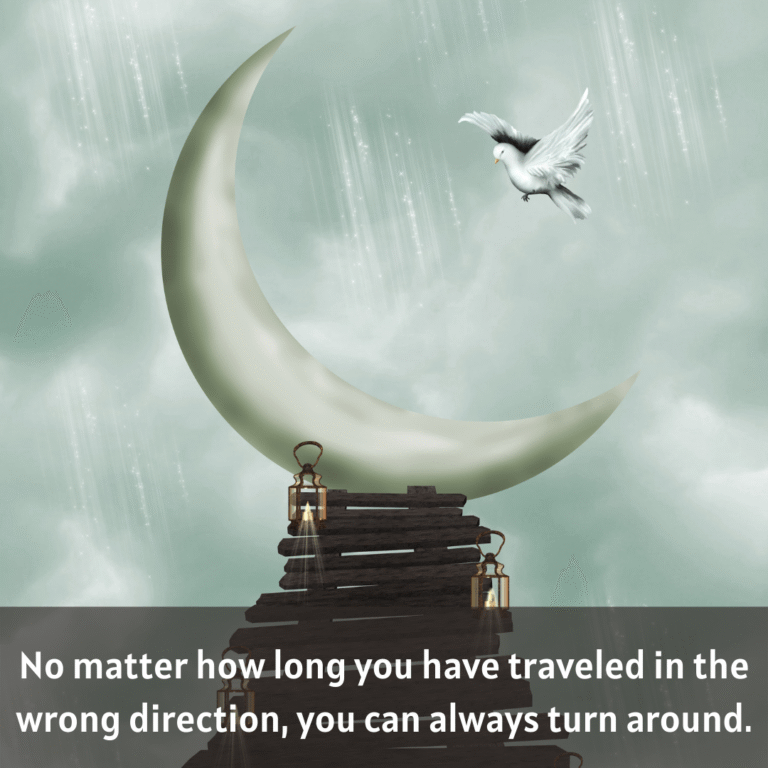
No matter how long you have traveled in the wrong direction, you can always turn around.

  • Post author:

Life is full of choices, and we don’t always know which way to go when we come to a fork in the road. We can easily get stuck going making a wrong decision and going down a path that isn’t healthy, supportive, or right.

However, one wrong decision doesn’t need to define your life. No matter how long you have traveled in the wrong direction, you can always turn around.

Signs You Are on The Wrong Path

There are tell-tale signs that will indicate that you are on the wrong path.

You’re Constantly Anxious

When you aren’t going the right way, you’ll experience constant anxiety. You might be anxious about paying your bills, hating your job, not spending time with people, etc. If you feel like you can never relax, you might be going in the wrong direction.

You’re Not Satisfied

People who are on the right path find satisfaction in the things that they do including work, hobbies, and social life. Feeling a lack of satisfaction may mean you need to find a different path.

You’re Doing What Someone Else Wants You to Do

Are you living life for yourself or for someone else? Sometimes we get stuck following the path that someone else has decided for us rather than the path that is right for us.

You have a Short Fuse

People who aren’t where they want to be can get angry easily and frequently. If you aren’t happy with where your life is headed, it is common to have a short fuse.

You Feel Like Something is Off

We often refuse to trust our instincts, but they can tell us a lot about what’s right and what’s wrong. If your gut feeling is that you are on the wrong path, you are most likely on the wrong path.

How to Turn Your Life Around

If you have found yourself on the wrong path, the good news is that you can always turn around. You are never stuck where you are, and you can use these steps to change your direction.

Identify Where You Want to Go

Realizing you are on the wrong path can be stressful, and the best way to turn around is to identify where you really want to go. Write down what is wrong with your current situation and find out what you need to do to get out of where you are.

Listen to Your Instincts

As noted above, your instincts exist for a reason. They are a great indication of where you are supposed to be and where you are not supposed to be. Learn to pay attention to the way your body and mind react to the choices you make.

Have Confidence in Your Decision

Wherever you decide to go from here, have confidence in your decision even if you have to fake it. Confidence propels us forward and helps us make choices that serve us well. Just because you made a wrong choice before doesn’t mean all your decisions will turn out wrong.

Make a Plan for the Future

Finally, you need to plan for your future. Planning is a powerful skill as it allows us to prepare ourselves for what is to come. Plan your next path and create a backup plan in case that path doesn’t work. You might go down a few wrong paths before you find the one that is right for you.

Remember, paths work both ways; you can go forward, but you can also go back. You always have the choice to change your direction because as long as you are still breathing, there is still time to change the road you’re on.  

Continue ReadingNo matter how long you have traveled in the wrong direction, you can always turn around.

Change is hard at first, messy in the middle, and gorgeous at the end.

  • Post author:

People tend to be resistant to change. Change brings uncertainty, loss of control, extra work, and concern that you won’t be enough to make it happen. However, change also brings personal growth, increased opportunities, and offers the chance to make your life better than it was yesterday. Change can be hard and messy, but change is always worth it in the end.

Why Are People Resistant to Change

Our brains are hardwired to be resistant to change. Even when we are presented with an idea or an opportunity that is undoubtedly better than our current situation, we see change as a threat, which often triggers our fight or flight response. So why do we always see change as a threat?

Uncertainty and Fear of the Unknown

Change is hard to initiate and accept because we don’t know exactly what the outcome of that change will be. Even if the outcome is somewhat guaranteed, we still think of things that can go wrong. We often feel that it is safer to remain exactly where we are.

Loss of Control

When we know exactly what we are doing in our day-to-day life, we feel in control of everything that happens. We know how our brand of computer works, we know how to do our current job with ease, and we know how to make the same meal we’ve eaten over one hundred times.

If we change something about our day-to-day lives, we lose that sense of control. A new job means that we need to learn how that company works, a new computer means we might not know the correct programs to use and cooking a new meal might require learning a new cooking skill.

Extra Work

Sometimes we resist change because we know making that change is going to require extra work. Change does not happen without putting in some effort, and that can make it hard to initiate change in the first place.

How to Overcome Resistance to Change

While people tend to be resistant to change, there are several ways we can overcome that resistance and make changes that benefit our lives in many ways.

Weigh the Risks

As mentioned above, we are resistant to change because we don’t know exactly what the outcome will be. A good way to get around that uncertainty is the assess what you are risking by making that change. The worst possible outcome is typically not as bad as we originally thought. It’s also important to weight out what you are risking by not making the change.

Take a Learning Approach

Change is inevitable in life. It is going to happen whether we like it or not. Why not embrace the changes and view them as an opportunity to grow? When we take on a learning approach, everything becomes a chance to expand our knowledge, skills, and talents, and we fear change less because we know that we will improve ourselves along the way.

Consider the Benefits of Change

We cannot move forward in life without change, and change is a beautiful thing! Let’s consider the benefits:

  • Change brings personal growth and development.
  • Change leads us to where we want to be.
  • Change brings excitement to life.
  • Change makes us stronger.
  • Change causes a ripple effect and leads to larger, more ideal changes.
  • Change allows us to see things in a new way.
  • Change brings flexibility.
  • Change allows us to see and have more opportunities.

With all of these amazing benefits, how could we say no to change?

Remember, change is not an easy roller coaster to get on, and it isn’t always a straightforward process. However, the result is always better than staying where you were and remaining the person you were yesterday.

Continue ReadingChange is hard at first, messy in the middle, and gorgeous at the end.

Evil is evil. Lesser, greater, middling. It’s all the same.

  • Post author:

Can you think of a time when you did something wrong, but tried to convince yourself it was not so bad?

If we are honest, we can all attest to doing this. Maybe it was a lie we told our parents, a mean word we said about a classmate, or that small candy bar we picked up from the store without paying for.

Whatever the intensity of our actions, they are still wrong.

But sometimes, we feel bad about our actions, so we try to justify them. But the truth is that evil is evil, no matter how you spin it. What is wrong will always be wrong.

This need to convince ourselves and rationalize that our actions are not really wrong is self-justification. We come up with reasons why what we did was okay, or why it was not as bad as something else.

What is Self-Justification?

Self-justification is one of the defense mechanisms that our brains use to protect ourselves. In this case, we protect ourselves from feeling guilty and feeling bad about ourselves. We do this by convincing ourselves that our poor choices were the best we could do, or that they aren’t as bad as other evils.

Self-Justification is Self-Preservation

Have you ever done something that you knew was wrong, and then been unable to sleep at night? Maybe you spent hours thinking about the situation and feeling bad, with a sickness clenching your stomach.

When we justify our actions, we are actually engaging in self-preservation. By justifying ourselves, we protect ourselves from this self-torture that we otherwise inflict upon ourselves.

Accepting We Were Wrong

However, this is a double-edged sword. While self-justification helps us sleep at night, it doesn’t change the fact that what we did was wrong. Evil is evil, no matter how big or small it is. So it is important to accept what we did was wrong, even if it hurts us.

By accepting what we did was wrong, we not only become stronger, but we can also save relationships. If we constantly try to convince ourselves that we were justified in our actions, we can never change! This can break relationships and result in more disaster.

For example, if you said something mean to your partner, you can justify it by saying you were angry or that your partner didn’t do what you asked them to do. But being mean was still wrong. If you keep justifying it, you will never work on being more careful with your words. Your partner might forgive you the first few times, but after a while, your relationship will be negatively affected.

Therefore, it is important to stop justifying and admit that we are wrong so that we can then change how we act to improve the situation. Remember, self-justification is a means of creating a new narrative that makes us feel good. But what is wrong will always be wrong, and it is up to us to try to do better. Admitting we are wrong takes courage, but it is worth it.

Continue ReadingEvil is evil. Lesser, greater, middling. It’s all the same.

You never look good trying to make someone else look bad.

  • Post author:

We’ve all been there; you’re in a room with a few friends, and one of them starts talking negatively about a friend that isn’t in the room. How does that make you feel? Do you feel like the friend in the room is a good person for bringing these negative qualities to your attention, or do you feel negatively towards the person in the room for trying to make someone else look bad?

I have a feeling that most of you picked the latter. When we try to make other people look bad, we hurt someone else’s reputation as well as our own. Before we dive into how making others look bad makes us look bad, it is important to understand why we try to make others look bad in the first place.

Why We Try to Make Others Look Bad

Low Self-esteem

People with low self-esteem tend to judge themselves constantly. It’s common for them to project their self-judgments onto other people as a way to lessen the judgment they place on themselves.

In addition, people with low self-esteem may feel that criticizing others prevents people from criticizing them. If they can get the negative attention (imagined or real) off of themselves, they receive less judgment in the end.

Unhappiness

Unhappy people don’t want to be alone in their unhappiness. Seeing other people happy when we aren’t happy ourselves can cause jealousy, and making other people unhappy can make us feel better about ourselves for a short time.

Gaining Attention

Gossip always brings a lot of attention to the person spreading it because people always want to know what’s going on. Spreading gossip can give people a sense of power and belonging because they have information that other people want.

Tearing Others Down Doesn’t Bring You Up

Making someone else look bad might make you feel good for a while, but eventually, you will realize how your actions reflect negatively on your character. Tearing others down has consequences.

People Will Trust You Less

If you are always gossiping, judging others, or making other people look bad, other people start to catch on and realize that you’re probably not someone they should trust. Putting other people down can ruin your relationships because no one wants a friend who hurts others to make themselves look better.

You’ll Gain the Wrong Kind of Attention

As mentioned above, some people belittle others for attention; however, making other people look bad doesn’t bring the kind of attention you want. Do you want people always coming to you to point out another person’s flaws, or do you want quality friendships who support you when you need help?

Negativity Attracts Negativity

The Law of Attraction states that positivity brings positive outcomes, and negativity brings negative outcomes. If you are unhappy or have low self-esteem, bringing others down by speaking negatively about them is only going to attract more negativity to your life. Remember, misery loves company.  

How to Actually Make Yourself Look Good

Putting others down is not the way to make yourself look good. So, what should you do?

Recognize That Your Only Competition is Yourself

In life, we should always strive to be better than we were yesterday. No one has the power to do that for us and relying on other people to make us look better will yield fruitless results. Make an effort to bring positivity into your life by developing new skills, forming new relationships, practicing mindfulness, and truly being kind to other people.

Remember, it is up to you to make yourself look good. And you never do so by making someone else look bad.

Continue ReadingYou never look good trying to make someone else look bad.

Accept what is. Let go of what was. And have faith in what will be.

  • Post author:

Pain can cause us to deny what is happening or hold onto it for too long. Maybe your partner cheated on you or you lost your wallet. Life constantly challenges us, and there are millions of situations that can hurt us.

So how do we deal with these situations? We can fight them and get angry, or we can get extremely sad. Another response is to question “why did this happen to me?” Some people also choose to avoid the situation and pretend nothing is happening.

But all of these responses don’t truly help us feel better or move on.

What’s the best answer, then?

Acceptance.

Acceptance is one of the most important aspects of mindfulness, and a practice that is not only promoted by monks but psychologists as well.

When you accept a situation, you avoid amplifying your pain. Acceptance means simply acknowledging your thoughts and your experiences rather than judging it as good or bad.

How to Practice Acceptance

Avoid Judgment

When we are in any situation, one of our first tendencies as humans is to label. We want to label everything as good or bad. When we go out for lunch, we make a judgment about the food, the ambience, the service, and the company. Before bed, we label our day as good or bad. We label our outfits as good or bad. We label our haircut as good or bad. We even label friendships as good or bad. We are constantly labeling: good or bad.

Acceptance, on the other hand, involves letting go of labels. Letting go of judgment. Just acknowledge what is.

Acknowledge

Sometimes, people don’t like the term “acceptance”. It makes them feel that you have to be okay with everything that happens, even if it is hurtful or unjust, or that you can’t do anything to improve the situation. That’s not true at all!

The term “acceptance” simply means “acknowledge”. You acknowledge, without labels. When you acknowledge something, you notice it and experience it. Then, if you think you need to take action, you can do that.

So if someone hurts you, acceptance does not mean you have to be okay with it and come back for more. Acceptance simply means you acknowledge that this person did something to you, and you felt hurt. It can also mean acknowledging that you want to set some boundaries in this relationship. 

Find Solutions

When you accept something, you don’t waste time and energy complaining, blaming, or criticizing. Rather, when you accept, you have the power to actually find a solution. You can acknowledge what went wrong and what the best way to move forward is. Then you can take that action without being emotionally charged.

Letting Go

The beauty of acceptance is that when you acknowledge a painful situation without any labels, it is a lot easier to let go.

For example, if your partner cheats on you, rather than blaming or criticizing or complaining, you acknowledge the facts. Someone you trusted immensely hurt you.

By accepting this and avoiding labels, you remove the emotional charge of anger or pain. Now you can think logically.

Are you okay with it? Do you want to give them another chance?

Whatever you choose, yes or no, acceptance gives you the power to let go of the negative emotions from this experience. It gives you the power to move on.

Remember, learning to practice acceptance is the gateway to more peace. When you accept, you can let go of the heavy baggage that pain, hurt, blame, criticism, and complaints bring.

Continue ReadingAccept what is. Let go of what was. And have faith in what will be.

Come on, Mr. Frodo. I can’t carry it for you…but I can carry you!

  • Post author:

Can I just say that when it comes to our circle of friends, we all need a Samwise Gamgee in it? Sean Astin (remember him as Mikey from The Goonies?)  plays Frodo’s (played by Elijah Wood) best friend through the Lord of the Rings Trilogy. In The Return of the King, Frodo Baggins is the ringbearer of the one ring that rules them all.

On their mission to destroy the ring and restore peace to Middle Earth, Frodo is slowly being overtaken by the ring’s power. Sam has been his biggest supporter and friend, even when Gollum tried to turn Frodo against Sam. While embracing Frodo on the slope of Mount Doom, Sam finds the strength and stamina to pick up Frodo and carry him into the volcano to destroy the ring once and for all.  

While we all need friends like Sam, to help us weather the storms together, we also need to be like Sam to our friends. Having people who care about you and are there for you during difficult times can ease your burdens. And it feels amazing to be the friend that brings someone that kind of comfort during their dark times. Even if they just want to sit in the dark for a while, you can sit there with them, so they aren’t alone.

Continue ReadingCome on, Mr. Frodo. I can’t carry it for you…but I can carry you!

Decide what kind of life you actually want. Then say no to everything that isn’t that.

  • Post author:

Have you ever wondered why you are willing to live a life that isn’t your ideal life? Or maybe you’ve wondered why you can’t seem to say no to things that aren’t serving you or making you happy. Let’s take a look at why people accept less than they want and figure out how you can “Decide what kind of life you actually want. Then say no to everything that Isn’t that.”

Why We Settle

People decide to settle for what they have or what they can get for several reasons.

  • We get comfortable with the way things currently are.
  • We think we don’t deserve better than what we have.
  • We are emotionally attached to what we have.
  • We are afraid of taking risks to get what we want.
  • We deny that our current life isn’t what we want.
  • We base what we want on the lives of other people and not on what we actually want.

No matter what your reason for settling is, it prevents you from getting the life you want.

The Difficulty of Saying No

Another thing that prevents us from living our ideal life is not being able to say no to things we don’t want.

One reason we struggle to say no is that we don’t want to create conflict. We think that refusing someone’s request will put us at odds with that person. Similarly, we may not say no because we don’t want to disappoint someone or ruin a relationship with them. In addition, we might think that saying no will hurt our chances of future opportunities or we feel like we’ll regret saying no in the future.

Saying yes to things isn’t always bad, but saying yes to everything puts you in a precarious situation and fills your valuable time with tasks that you never wanted to do.

How to Start Living the Life You Want

If your life isn’t what you want it to be, you can always take change it for the better. Here are four ways you can start living the life you want.

Look at Your Current Life

To start living your ideal life, you first need to take a good look at your current life. What about your life isn’t what you want it to be? Think about the many areas of your life: your relationships, your home, your job, your schedule, your hobbies, your habits, etc.

Dream a Little Bit

In addition to analyzing your current life, take some time to dream about your ideal life. A good way to do this is to take out a piece of paper and write a story about an ideal day in your life like it already happened. Be specific and add as much detail as possible. Then read your story over and see what changes you need to make to achieve that life.

Take Action

Now that you know what you want out of life, take action to make the changes you want to make. Outline 5 steps you need to take to make each change, and focus on devoting your energy to one change at a time.

Learn to Say No

While you are building the life you want, it is important that you learn to say no to what you don’t want. Your time needs to be devoted to what matters to you and what makes you thrive. Say no to anything that doesn’t support your ideal life.

You always have choices in life. You can settle for the life you have, or you can make the life you want. You can say yes to things you don’t want to do, or you can say no and reserve your time for things that serve you.

Continue ReadingDecide what kind of life you actually want. Then say no to everything that isn’t that.