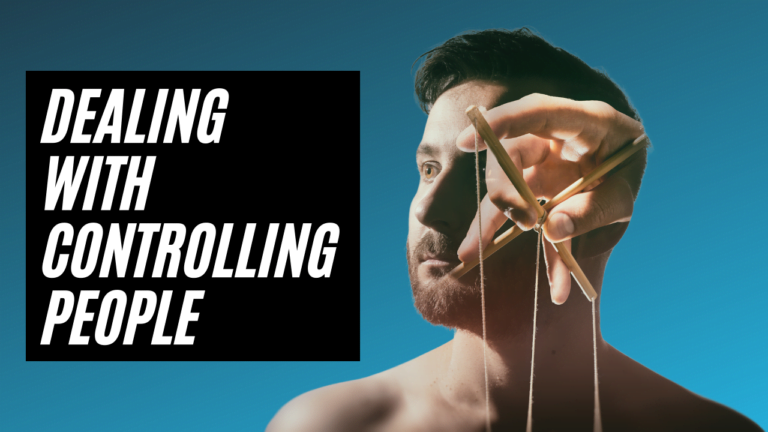
People who feel the need to control others, don’t have control over themselves.

  • Post author:

The need to control others is born out of insecurity, anxiety, fear and low self-esteem. If someone feels out of control emotionally or mentally and cannot regulate their own feelings, they turn outward to get that sense of control and security from something external – typically another person.

Their sense of self-esteem and well-being is dependent on the reassurances that control gives them. However, they never really have real control over someone else and any morsel of control they do have, is very short lived. And when they perceive any sense of losing that control, the cycle starts again because they desperately need that external reassurance by having control to feel secure. These people are highly outcome dependent and will go to great lengths to get their needs met by controlling others.

The desire to control others can come from many places. Perhaps one feels uncertain about the future and feels that they are powerless in the situation, so they seek to control others so that they feel more certain. Someone who fears abandonment may try to control their significant other so that he or she doesn’t leave them. They may constantly test the waters by behaving poorly to see if their partner will leave them and feel reassured when they don’t. But ironically, this kind of behavior ends up pushing the other away and creating a self-fulfilling prophecy of abandonment. Someone who secretly feels like a fraud may try to control others’ impressions of them because they fear being “found out” and rejected or abandoned.

These are all ineffective thought patterns that cannot be changed by anything external. It can only be addressed within.

The tricky thing about this kind of behavior is that it is typically deeply ingrained in people. They learned as a child that how you feel loved, safe and secure is through controlling others. They were taught as a child that they get their needs met through manipulation and influence. And if that is the only way they know how to get their needs met, it is going to take some time and consistent effort to reprogram their brain to get their needs met in a healthier way.

When someone attempts to control you, remember that it is born out of feeling of lack that they feel is within themselves. They may project confidence, but underneath the surface is insecurity. Remember that their behavior has everything to do about how they feel about themselves and nothing to do with you.

Here are some steps you can take when responding to someone who is trying to control you:

1.) Communicate with them about how their behavior is impacting you. Use “I” statements instead of “You”.

2.) Offer to help brainstorm alternatives to the controlling behavior. Like mentioned previously, controllers don’t often know how else to get their needs met. By offering up ways you prefer they interact with you, they can understand a healthier, more effective way to get their needs met. For example, if your partner has a habit of committing your time to things before asking you, tell him or her to ask you first so you can check your calendar.

3.) Understand what you really want and respond accordingly. Don’t just give in to a controller’s demand to keep the peace. If a boundary needs to be set, this is the time to set it. Be clear and firm with your boundary.

4.) Don’t get sucked in to debating your feelings or why what you feel is valid. How you feel is valid and you don’t need the other person to agree. Remember that they derive a sense of security and safety by controlling other people. They will see you asserting yourself as a power struggle. If they don’t like what they are hearing from you, they will be highly motivated to wear you down, so you agree with them and they feel better. As tempting as it may be to end the conversation and just agree, if you do, you are teaching them that this tactic will work on you and it will be repeated. If they keep trying to get you to engage, simply tell them that you will both have to agree to disagree, or that it is what it is and end the conversation.

Continue ReadingPeople who feel the need to control others, don’t have control over themselves.

You either walk inside your story and own it or you stand outside your story and hustle for your own worthiness.

  • Post author:

When we don’t own who we are, we feel like we need to be someone else to measure up. We come from a place of lack and not feeling like we are good enough as we are. But the truth is, it is our imperfections and flaws that make us relatable, unique, beautiful and…human.

If we can’t accept ourselves as we are, how can we believe that other people will? Even if they do, we won’t be able to see it.

Remember that the experiences and struggles you have had do not define you. Don’t let your struggle become your identity.

Here are some things to remember about your value and worth:

  • Your value doesn’t decrease based on someone’s inability to see your worth.
  • Self-love, self-respect, self-worth all starts with the word “self” because you can’t get them from anyone else.
  • If you find yourself constantly trying to prove your worth to someone else, you have already forgotten your value.
  • In order to love who you are, you cannot hate the experiences that shaped you.
  • You are not your mistakes. They are what you did, not who you are.

Like Danielle LaPorte says, “You will always be too much of something for someone: too big, too loud, too soft, too edgy. If you round out your edges, you lose your edge. Apologize for mistakes. Apologize for unintentionally hurting someone- profusely. But don’t apologize for being who you are.”

Be proud of who you are. Own everything about yourself. Have the courage to step up and live your story. You never know who may see you and feel inspired to do the same.

Continue ReadingYou either walk inside your story and own it or you stand outside your story and hustle for your own worthiness.

Consistency will always beat short term intensity.

  • Post author:

You will never change your life until you change what you do daily. Consistency will always be more effective than short term intensity.

Short term intensity often comes from feeling highly motivated. It can be a great start towards a goal, but discipline is born out of consistency. Discipline is what is going to keep you going when you aren’t motivated. And no one is motivated 100% of the time.

Tim Ferris says, “The decent method you follow is better than the perfect method you quit.”

Whether you are working on weight loss and fitness, saving money or being a better parent or partner, strive for consistent progress, not perfection. It is okay if your path isn’t linear.

Continue ReadingConsistency will always beat short term intensity.

Go Chasing Waterfalls

  • Post author:

I love being outdoors. There is something about feeling the sunlight on my skin and breathing in the fresh air that just nourishes my soul. What I love the most about being immersed in nature is that it recharges my spirit. Being around all this truly amazing scenery here on this Earth gives me perspective and reminds me that I have a purpose here. And it doesn’t matter where you live, there is beauty everywhere if you know where to look.

From as long as I can remember, I have loved chasing waterfalls. I once read that waterfalls symbolize the process of letting go, cleansing the soul and the continuous flow of life energy. To me, they are magical. When I was a kid, there was this small waterfall close to a house I visited often with my mother. And I would look forward to those trips because there was this small waterfall and swimming hole, surrounded by all these trees. And of course, to my young eyes, I felt like I was in a fairy tale. I felt like there were fairies and pixies everywhere. 

One of my favorite places in our country for chasing waterfalls is the Columbia River Gorge in Oregon. Located just east of Portland, this place reminds of me Rivendell from Lord of the Rings. And the cool part about this area, is that there are so many roadside or short walk waterfalls along the way. There are also more strenuous hikes all along the area, too. But I love the idea that anyone with any kind of skill level can enjoy these waterfalls up-close.

Let’s take a look at two easy hikes along the Columbia River Gorge.

Shepperd’s Dell

This is just one section of the waterfall along the path.
See what I mean about feeling like you are in Rivendell? So much moss and greenery and water.
This is the end of the trail. It’s so beautiful and we had the area to ourselves the whole time!

Wahkeena Falls

There is a viewing area that you can drive up to see the falls. You can see it above.

If you are feeling up to it, there is a short trail to the falls that is so worth it. It’s only .2 miles, but there is some elevation gain. If you go the opposite way for .5 miles, you will get to Multnomah Falls. I love Multnomah, but it is very crowded. But here it is, it’s beautiful!

Multnomah Falls – only .5 mile hike from trail

Notice all those people on the bridge! It’s just too crowded for me. If you go here, try to go off season.

But here’s the trail for Wahkeena. It’s serene and not many people were on it when we went. We maybe passed one family.

Are you ready for it?!

It was a short hike and totally worth it! There weren’t many people here and the mist on my skin was refreshing.

If you come out this way, note that sometimes there are fires in the gorge area and that some of the trails can become unsafe. Be sure to do your research and pay attention to the signs they post.

Where is your favorite waterfall?

Continue ReadingGo Chasing Waterfalls

You wanting a sign is a sign.

  • Post author:

There is a difference between wanting a sign and being open to listening for answers or guidance. When I think about times that I just wanted a sign that I was doing the right thing, I was really looking for reassurance that I was doing the right thing. I was seeking evidence that I was making the right choice. And that is where things can get tricky.

If you’ve been reading my posts for a while, you know that I am a big believer in the Law of Attraction. And that I talk extensively about how what we believe about ourselves and the world around us determines how our brain receives information.

When we come from a place of seeking signs, our brains will filter information to us that confirms what we want to believe. Sometimes that’s actually a good thing, other times, it can create confirmation bias and lead you astray.

If you are really wanting a sign, do this: Call heads on one option and tails on the other option for what you will do and flip a coin. You will realize while that coin is up in the air, what you really want it to land on. And from there, you can open yourself up to guidance from the universe that it is the right choice.    

Continue ReadingYou wanting a sign is a sign.

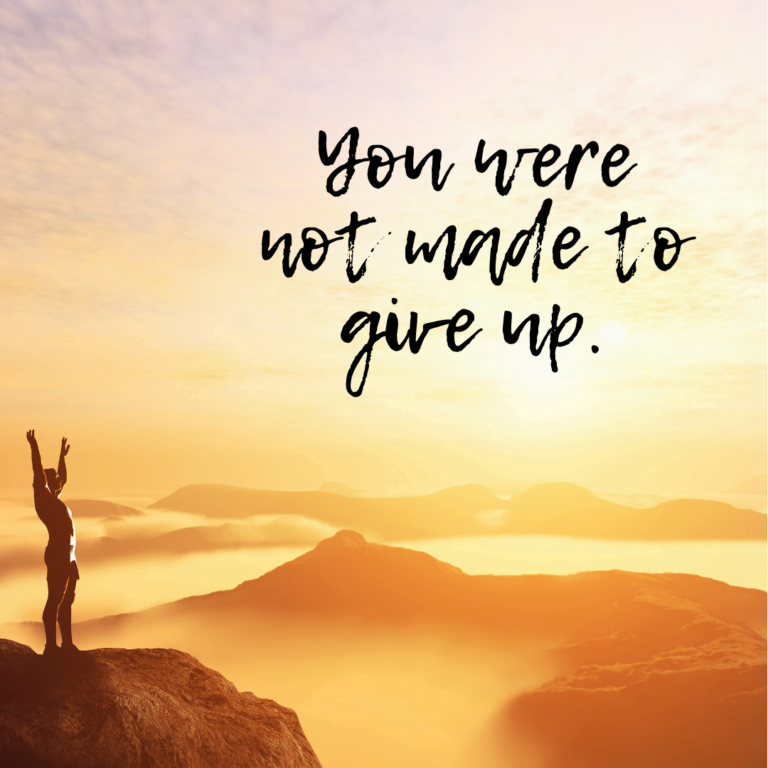
You were not made to give up.

  • Post author:

We all have been to a point where we throw our hands up in the air and just want to give up. I’ve found myself there many, many times.

What we need to remember during these times is that sometimes our lives have to completely fall apart, so we can rebuild it, stronger than it’s ever been. We have to go through the darkness to get to the light. What may feel like the end of the world, may be a necessary step in our journey for our next chapter. And I know, it’s so much easier to say these things when you aren’t going through it.

When I feel overwhelmed and nothing seems to be going right, I re-commit to myself that I will not give up. I slow things down and think about what is happening and what I can learn from it. I practice good self-care. Then I focus on what is really in my control. And those things that I can control? Well, those are the only things I focus on because those are the only things I can actually do something about. However, sometimes knowing that you have control over certain things can be overwhelming itself.

One of my favorite authors, Sarah Knight (I swear she is my super witty soul sister), has created a series of books that are apart of A No F*cks Given Guide. In Get Your Sh*t Together she reveals the magical art of how to break down tasks, that really can apply to any goal you have, by pairing down everything down to small, manageable chunks.

So, after determining what you do have control over and what you want to do about it, break down all the steps you need to take into smaller chunks. It might feel like you aren’t getting anything done at first. But trust me, once you start doing this, it will become second nature and you will get through things that make you feel like you are making progress.

One other tool that I find useful is doing “pomodoros”. What is a pomodoro, you ask?  A pomodoro is a 25-minute chunk of time you set aside to 100% focus on a task. Set a timer for 25 minutes and work on your task. Take a 5-10 minute break to refresh yourself, then do another pomodoro. I also use a productivity planner that you can get here that helps me organize the chunks/tasks that I want to prioritize.

Continue ReadingYou were not made to give up.