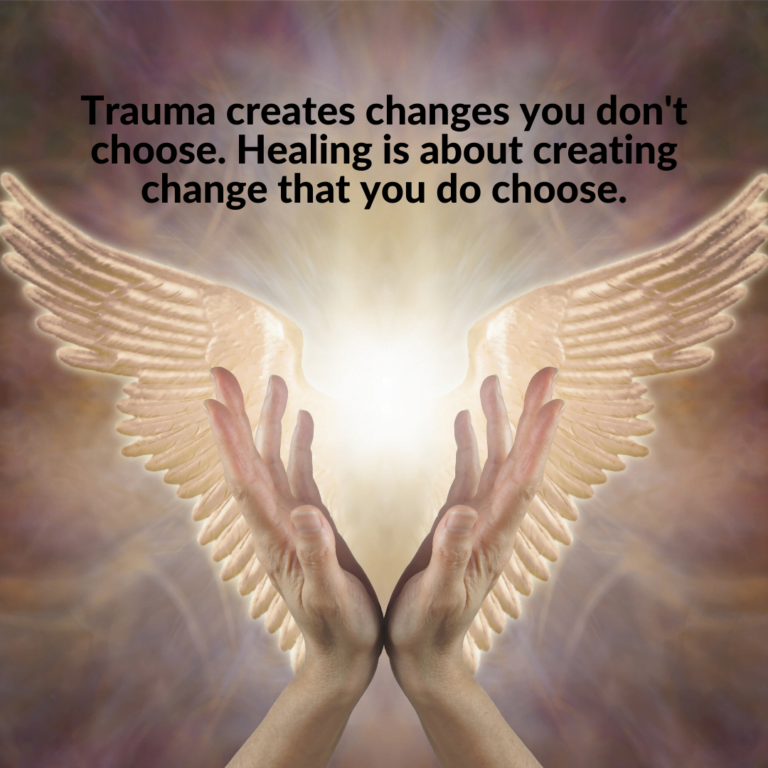
A few years ago, I volunteered my time as a crisis counselor for an amazing organization. I worked with people from all ages and walks of life. The work I did gave me an intimate look at how many horrific traumas people have gone through, and different stages of the process they were in while dealing with it. I admired their courage to talk about it and release themselves from the burden of carrying it all on their own. Trauma is not something we choose. It changes us. Whether it’s a one-time event, diagnosis of a chronic or terminal medical illness or ongoing, relentless distress, that trauma, whatever it is, becomes part of us, whether we want it to or not. Sometimes it leaves us very real changes, like physical changes or psychological changes like PTSD or panic disorder. If you have experienced trauma, know that it wasn’t your fault and that you didn’t deserve for it to happen. In Man’s Search for Meaning, Viktor Frankl, a Holocaust survivor, said, “When we are no longer able to change a situation, we are challenged to change ourselves.” We can’t change what happened to us. But we can change how we respond to it. Healing from our trauma allows us to take back our power. We get to choose from that point forward how things are going to go. What we can do in taking back our power becomes limitless. We get to determine what we will do with our experience and how it will shape us going forward. But more so, healing is our responsibility. While we aren’t responsible for what happened to us, we are responsible for healing ourselves. Interestingly, researchers have discovered that many people who experience trauma, also experience incredible growth. As in, more than your average person who hasn’t experienced trauma themselves. Called post-traumatic growth, it is defined as “positive psychological change that is experienced as a result of the struggle with highly challenging life circumstances.” In a recent Scientific American article, they list seven areas of growth seen in people who experience high levels of adversity: Greater appreciation of life Greater appreciation and strengthening of close relationships Increased compassion and altruism The identification of new possibilities or a purpose in life Greater awareness and utilization of personal strengths Enhanced spiritual development Creative growth The article is a fantastic read and goes into depth about this topic, in layman’s terms. It highlights different facets of the process and the struggles that one can overcome to get to that place of incredible growth. You can read the full article here. While the idea of healing and post-traumatic growth sounds fantastic, it takes time. A lot of time. And it isn’t easy. Sometimes it takes therapy. Working through what wounded you is a gift you can give yourself – a gift you 100% deserve. You were created to live a victorious, extraordinary life. And if you are struggling right now, know that you are not alone. We all…