Empathy without boundaries is self-destruction.

  • Post author:

As an empath, this is something I struggled with for a long time. I never really knew where to draw a line or how to create boundaries. I honestly believed that having boundaries when it came to the people I love was selfish.

While empathy is essential for developing deep, intimate relationships with others, it is also necessary to know how to balance your own needs and self-care, too. Otherwise you will fall into a vicious cycle of constantly tending to the needs of others, while failing to take care of your own basic needs.

When this happens over a long enough period, you open yourself up to a few mental health challenges, such as:

  • Losing the ability to fully understand what you want or need.
  • Becoming mentally exhausted and can’t fully show up for other people in your life.
  • Having a hard time deciphering what is truly in your best interest.
  • Having bursts of anger and frustration and not really understanding why.
  • Putting yourself in a vulnerable position to be mentally and emotionally abused, such as someone gaslighting you.
  • You find that your mood changes and mirrors what the other person is feeling, instead of holding on to yourself and what you feel.
  • You find yourself worrying about what others think of you, rather than focusing on what you think of yourself.
  • Becoming more anxious, depressed or just having an overall feeling of emptiness when forced to sit with your own feelings.

As you can see, these patterns can become part of your daily life and can dramatically affect your wellbeing.

So, what does healthy empathy look like? It’s having the ability to put yourself in someone else’s shoes and pay attention to their needs, without sacrificing your own. And for many of us, it is incredibly difficult to even understand our own needs in those moments.

The secret to understanding our own needs is mindfulness. Being mindful of what you need and what you want for yourself. And this is especially true for when you feel the urge to be overly empathic.

For example, say your significant other wants to talk about his crappy day at the office and you know from past experience that those conversations can go on for the whole night. And you’ve had a crappy day, too. In that moment, you might be triggered to be a ‘good partner’, suck it up and be a good listener. But being more mindful of your feelings and needs in that moment might look like this: “Honey, I am sorry you had a bad day at the office. I would love to talk to you about it another time, perhaps tomorrow night. I had a very stressful day at the office, too, and my mind is just shot now. I really want to just unwind and decompress tonight. How about we plan on talking about it tomorrow night over dinner? We’ll both be more refreshed and can approach it from a better place.”

Before giving this response, I might run through the following in my head:

1.) What is my objective? It’s to unwind tonight because I had a horrible day. And I do want to be present when supporting my partner when he talks about his day, but I know I’m not in a good place to do so tonight. I just won’t be effective.

2.) What are my goals for my relationship? I always want to be a supportive partner. And I am hopeful that my partner understands my boundary tonight, because 9 times out of 10, I’m available. And tonight, I know I wouldn’t be the best listener.

3.) How will I feel towards myself if don’t take care of my need to just decompress tonight? How will I feel towards myself if I opt to listen to my partner talk about how messed up things are at his job for hours tonight?

Being mindful and clear with yourself with those three questions is the key to not only having an effective response but being able to create healthy boundaries. Sometimes your objective will be the most important thing, and sometimes your relationship or self-respect will be. It’s all about finding the right balance.

At the end of the day, you are responsible for taking care of yourself and setting healthy boundaries. Remember, what you allow in your life, will continue. And you have the power to determine how things go.

Watch video about Empathy without boundaries is self-destruction:

Continue ReadingEmpathy without boundaries is self-destruction.

You can’t wake a person who’s pretending to be asleep.

  • Post author:

What does it mean when someone pretends to be asleep? To pretend to be asleep is to deny seeing what is right in front of you. It is avoidance. And before we judge it, we need to understand that this is a very human response. Sometimes we protect ourselves by denying what is happening because we just don’t know how we’d deal with it if we acknowledged and accepted it. 

But how do you handle a situation where someone you love is in complete denial of a serious problem?

We all have people we care about who may make choices that don’t seem to serve them. In many cases, we can have an honest conversation with them about it and express our concerns. But in those moments when we want to help the most, we have to discern one of three things:

A.) Does this person see where you are coming from and can admit that the situation is what it is?

B.) Did this person lack awareness of your perspective and are they able to have a conversation about it, whether they agree or disagree with your perspective?

C.) Are they in complete denial of the issue and pretending that it doesn’t exist?

If someone refuses to see what is happening in front of them, it is a conscious choice on their part and one they have every right to make. The reality is, they know what is happening is not good. And by trying to confront them about it with good intentions, simply exasperates their own feelings about the situation that they are seeking to avoid.

What we have to realize as a concerned friend is that they have decided with full knowledge of the situation that they want to opt out and pretend it isn’t happening. They have the right to choose this, as frustrating as this may be.

What you need to choose is whether or not you are going to spend your energy trying to wake someone who clearly doesn’t want to be awake. And just because you choose to allocate your energy elsewhere, doesn’t mean that you can’t be there to support them when they awake.

Continue ReadingYou can’t wake a person who’s pretending to be asleep.

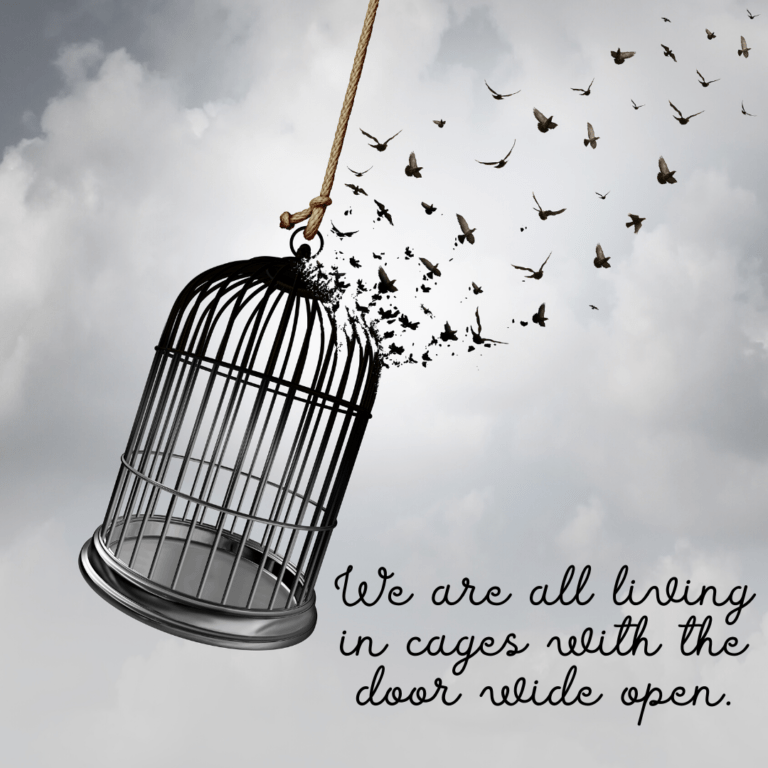
We are all living in cages with the door wide open.

  • Post author:

We create our own limits. Our mind can be an impenetrable prison, created by our own fears, insecurities and reasons why we believe we can’t be the person we want to be or can’t achieve something. It is a buffer we create to protect ourselves from rejection and failure. We stay in our cages on our perch, watching the world go by, safe from harm, taking no risks. Yet we were created to fly. And the door is wide open, if only we dared to step out of them.

What happens when we stay in our cages is that we don’t allow ourselves the opportunity to even try. We have all these rationalizations as to why we shouldn’t try, why it isn’t safe, and if your mind is really sneaky like mine, you can convince yourself that you don’t even want what resides outside of your cage. You see, it’s not who you are that holds you back, it’s who you think you aren’t.

Now here’s the thing about cages – they are mighty comfortable. They are known and we feel safe in them. But nothing amazing ever came from just staying in our comfort zone. Instead of focusing on what kinds of scary things might happen outside of our cages, we need to look at it like what we might be missing by staying in our cage.

We can start questioning our restricted existence in our cage, but contemplating the following: 

1.) What am I fearing? Where is this fear coming from? Fear of the unknown is hardwired into our brains. We needed it for survival years ago to not get eaten by a tiger. But in our modern age, 99% of what we fear or worry about never even happens. So, understand why you may be fearing a certain situation. By doing so, you can then begin to…

2.) Develop a game plan for the worst-case scenario. Often times, what causes us anxiety is not knowing how we will handle something bad happening. But if we can rationally work out ways we can handle it, we have a plan should it happen.  

3.) Accept that failure will happen and choose to look at it as experience. There is a quote that says, “I have not failed. I’ve just found 10,000 ways that it won’t work.” We define our own experience from situations by how we look at them. We can allow ourselves to feel demotivated or why can say, “plot twist” or “challenge accepted” and keep trying.

4.) Surround yourself with people who want you to succeed. It has been said that we are the sum of the five people we spend the most time with. Are the people around you negative? Do they try to talk you out of stepping out of your comfort zone? Or do they support you while you are on your own journey? Having quality people around you who truly care about you can be the encouragement you need to keep going.

Now I know what you are thinking. If you venture out of your cage today, you might fall. And it’s true, we all fall sometimes. But let’s look at it like this: what if you step out of your cage and you fly?   

Continue ReadingWe are all living in cages with the door wide open.

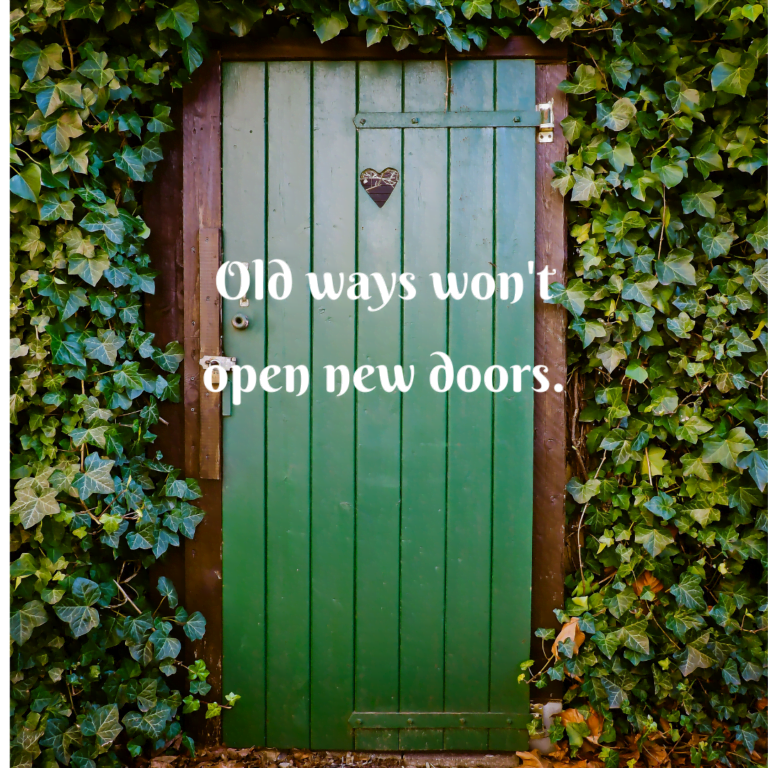
Old ways won’t open new doors.

  • Post author:

If nothing changes, then nothing changes. It’s like taking the same action and expecting a different result than what you get – each and every time. Change is hard, but what is harder is staying exactly where you are, in a place you have outgrown, just to feel safe. It might feel good at first, but you stay stagnant, bereft of freedom to live life on your own terms.

When you think about it, life is one calculated risk after another. Everything you do, or choose not to do, has some element of risk associated with it. We pick and choose which risks we should take without even realizing it. But on a more meaningful level, there are risks we refuse to take because we are simply scared of what will happen. But when you choose to risk nothing, you risk everything.

Let’s take a look at some ways we can begin to take more calculated risks.

1.) Be clear about your objective. Know what you really want and what the risk is if you don’t try to achieve it.

2.) Don’t wait until you feel 100% ready. If you wait until you feel 100% ready, you will never take the chance. Fear of rejection or disappointment is usually what holds us back. Start questioning it. If you ask for a raise and you get told no, what is the worst that will happen?  The reality is that you will never experience things in life without taking real chances of things not going as planned.

3.) Write out pros and cons to taking the risk and not taking the risk. How will you benefit by taking the chance? What might be a good reason to hold off on making the move now? Writing out a list like this can help you organize your thoughts and put things into better perspective for you.

4.) Become friends with uncertainty. Feeling uncertain about what will happen when we choose to act can be paralyzing. But uncertainty is part of life and allows us to experience things we may not have had the chance to experience if we stayed in our comfort zone. When you feel uncertain about something, write it down and write out all your fears and worries associated with it. Then game plan on how you can address these potential issues should they arise.

5.) Surround yourself with fellow risk takers. Having friends who constantly try new things and get out of their comfort zone often can be inspiring! We see the positive effects of it, and also how they handle failure or uncertainty. And watching people overcome their hurdles inspires us and shows us that we can overcome things, too.

Continue ReadingOld ways won’t open new doors.

No rain, no flowers.

  • Post author:

Just like there can’t be good without the bad, if there was no rain, there would be no flowers. What makes life beautiful is the journey that we walk during our limited time on this earth.  Without struggle and hardship, we wouldn’t develop into the resourceful, capable people that we are.

When it’s raining for days in our world, we can lose sight of what comes after the storm. But what if we just allowed ourselves to fully experience the rain? What if we learned to celebrate the rain and even dance in it?  

There is this feeling in the air, this scent of renewal after a rainstorm. When it has been dry outside for a while and we have a heavy rainstorm, we experience a phenomenon called petrichor.  Petrichor is the earthy scent that is produced when rain hits the dry soil on the ground, resulting in a distinct earthy, pleasant smell, or what we typically call “the smell of it having rained.” What’s fascinating is that what actually causes the scent in the air is the bacteria that has taken up residency in the soil. When we have periods of no rain, microbes, such as streptomyces, produce spores in the ground. When the rain hits the microbes, the pleasant scent is emitted into the air.

The rain cleans the earth. It provides nourishment and life. And is vital to our existence, just like the rain is in our life.

Continue ReadingNo rain, no flowers.

You have to train your mind to be stronger than your emotions or else you’ll lose yourself every time.

  • Post author:

Our emotions have the ability to influence everything in our lives. It can be a wonderful thing if balanced with being rational. But when our emotions run unchecked, it can lead to a lot of unexpected problems.

Studies have shown that emotional stress has been linked to not only mental health issues, but physical health problems as well. Poor emotional health can put you at risk for a compromised immune system, heart disease, gastrointestinal distress and all sorts of other issues. But the good news is that researchers are now seeing evidence that when we are in a healthier mental space, we can experience healing effects within our bodies. 

We’ve known how powerful our minds are and how they are connected to our body. We’ve seen it play out with super negative people. Have you ever noticed how negative people tend to suffer from many physical ailments?

We’ve also seen it play out with the Law of Attraction. What we believe about ourselves and the world, we create in our life. We actually manifest it.

So, if we have the ability to directly influence our mental and physical health with our emotions and beliefs, we just need to understand how to temper our emotions with logic.

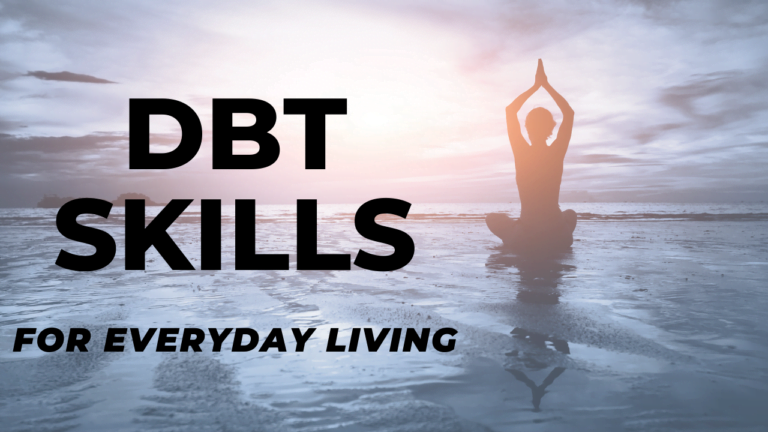
When I was in my early 20’s, I was seeing a therapist who suggested that I take DBT (Dialectical Behavior Therapy) classes to manage my anxiety and excessive worry. DBT is a type cognitive behavioral therapy that focuses on four skills: mindfulness, emotional regulation, distress tolerance and interpersonal effectiveness. I had two classes a week in the evenings. One class was instructional, where we learned the skills. The other was more of a process group where we talked about how we were (or weren’t) implementing the skills we were learning into our lives.

Although DBT was originally intended to help treat borderline personality disorder, it has become widely used to treat all sorts of conditions like anxiety, eating disorders, substance abuse, PTSD, etc. There has also been a movement in the psychology field for children to learn these skills at a young age, because unfortunately, many people don’t learn these life skills until they are much older.

I highly recommend looking into DBT and researching it yourself to see if it is something that may be helpful for you if you struggle with handling your emotions effectively. 

In a nutshell, here’s a breakdown of what the four components of DBT are:

1.) Mindfulness.

This is probably the most important skill because you learn how to stay in the moment. Feelings of anxiety are about the future and feelings of shame or guilt are usually about the past. So training your mind to stay in the present allows you to better understand what is really going on inside of you in that moment. You learn how to observe or notice these feelings in the present in a non-judgmental way. It allows you to slow things down and get into a good headspace to deal with your emotions effectively.

2.) Emotion Regulation.

These are skills to more effectively navigate your feelings. You learn how to identify your emotions, recognize and reduce your emotional vulnerabilities and implement a behavior change to help regulate your initial emotion. For example, if you feel sad and just want to be alone, one skill you learn is do the opposite action, which would be reaching out to people and attempting connection.

3.) Distress Tolerance.

Distress tolerance skills help you tolerate or survive the crisis that is happening. Here you learn how to effectively distract yourself, how to self-soothe, how to improve the moment by focusing on what you can control and thinking of the pros and cons of a response.

4.) Interpersonal Effectiveness.

This component helps you be more assertive in your relationships, say no when you want to say no, and how to handle conflict while maintaining a healthy relationship. The focus is on three things: your objective (what you want in the interaction), your self-respect (the values and beliefs you want to uphold) and your relationship (the valid needs of others). For example, one of the skills for interpersonal effectiveness in how you interact with others is called “GIVE”:

            G – Be gentle. Treat the other person with respect. Avoid attacks and judgmental statements.

            I – Show interest. Listen to the other person to hear, not to just respond. Don’t interrupt.

            V – Validate. Show through words and actions that you understand the other person’s thoughts, feelings and opinions about the situation.

            E  – Easy manner. Respond with smiling and using a light-hearted, humorous tone.

There is a great resource called the DBT Skills Training Handouts and Worksheet Workbook that goes into detail on all the skills above. You can find here. It is a great guide for applying DBT but is even more effective when used in a clinical setting.

Video for You have to train your mind to be stronger than your emotions…

Continue ReadingYou have to train your mind to be stronger than your emotions or else you’ll lose yourself every time.

Rock bottom will teach you lessons that mountain tops never will.

  • Post author:

Most of us will hit our own rock bottom at some point. Whether it is an illness, death of a loved one, becoming unemployed with zero savings, a divorce, losing your house, a horrible accident that changes your daily life – the possibilities are endless. And what we learn about who we are and all that we are made of begins in our black pit of despair.

These times when we have lost hope or lost everything that brought us a sense security or happiness are not only when we learn the most, we can actually become so much more than who we were before. These experiences help us gain experience and wisdom like nothing else ever could. J.K Rowling has been quoted saying, “Rock bottom became the solid foundation on which I rebuilt my life.” These are the definable moments that can change your life for the better.

What can you learn in these moments? Here I will share some of what I have learned through my own descent to rock bottom.

1.)  I realized how grateful I felt for everything in my life – even the small innocuous things. Hitting rock bottom changed my perception of everything and everyone around me. I became more compassionate and accepting of people and where they were on their journey.

2.) When you have nothing, you have nothing to lose. So why not embrace the madness of your creativity? Because if not now, when? Rock bottom pushes us out of our comfort zone, so we become more open to all the things we were afraid of doing before.

3.) You discover who your real friends are. When you have nothing to give or you’ve been beaten down and battered, the people who show up for you are your real friends. You will find that people that you expected to be there, weren’t and people who you never thought would be there for you, were, and in a genuine way.

4.) You learn how to really love yourself and that you are here for a reason. You learn your value and appreciate all that you have overcome. And you refuse to lose sight of your self-worth.

5.) You are forced to look at everything that led up to your rock bottom and where you may have contributed to where you are. You develop radical accountability and responsibility for yourself and take complete ownership of your role in what happened, and in your life moving forward.

6.) You realize just how resourceful you are. When things become crazy and your life is in shambles, you literally dig deeper into your soul and are willing to give things everything you’ve got. You think outside the box. And you refuse to give up.

7.) How you respond to what is happening is so much more important than what is actually happening. There are so many things that happen outside of our control. What defines our character is how we deal with it and what we do with the hand we have been given.

8.) Sometimes we have to completely fall apart, so that we can rebuild ourselves into something better. I often think if a butterfly emerging from her little cocoon. Just when she thought her world as she knew it was ending, she became a butterfly. What if everything that is happening right now is what needs to happen to catapult you into a better place?

So now I turn this to you. What have you learned at your rock bottom?

Continue ReadingRock bottom will teach you lessons that mountain tops never will.