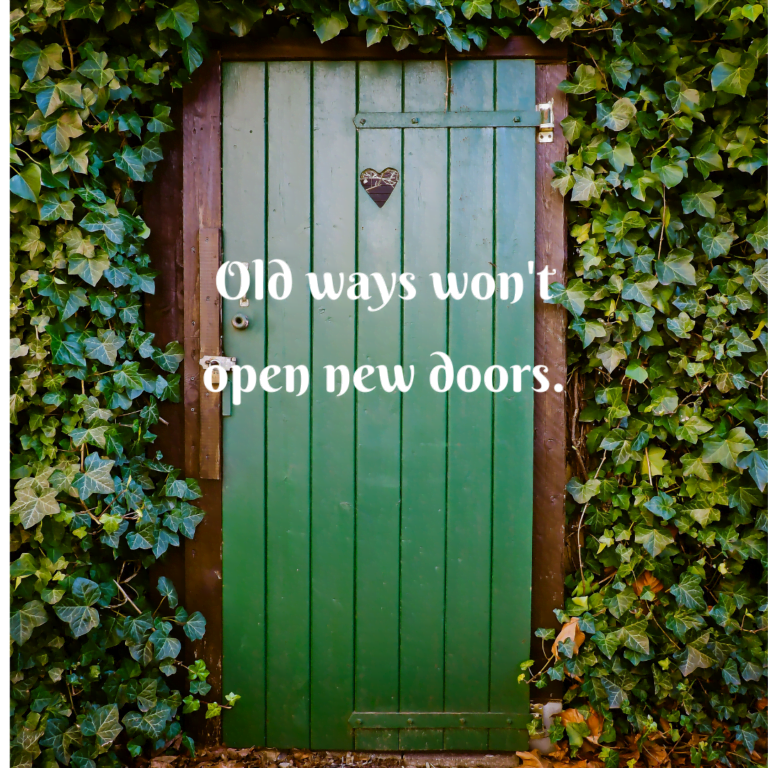
If you can count on anything in life, that is change. Just like the seasons change and we grow and evolve, everything else around us changes. We have this comfort in the known and when we feel the threat of change, we freak out.
But since change is going to happen anyway, why not embrace it? Instead of seeing it as an inconvenience, what if we looked at it like an opportunity?
Here are some ways you can become more open to change:
1.) Give up feeling resistant to it. Our natural reaction is to hunker down in our position and try to resist it or try to get out of the situation. We like feeling in control. Lao Tzu teaches us that resistance to change creates sorrow in the long run. Why? Because we can’t control everything that happens. What we can control is our response to it.
2.) See change as an opportunity for growth. When things are changing around us, it can test our character and all that we are. It forces us out of our comfort zones, which is where the magic happens. We can look at change as an ally, and as something that helps propel us forward to transform us.
3.) Affirm to yourself that you are adaptable. Change allows us to learn how to become more resourceful, flexible and resilient. It is the ultimate test for us. If we tell ourselves that we got this enough, we will begin to believe that we do. And as we overcome challenges that come with change, we will see evidence of it.
When we don’t keep ourselves busy and feed our mind positive things, we can fall into the trap of getting in our own head. Whether it’s our own thoughts or all of scary headlines about coronavirus we are bombarded by daily.
What does that mean? It means we tend to overthink things, self-examine and worry beyond what healthy reflection is. We can get caught in the vicious cycle of rumination and stay stuck there.
Let’s look at common triggers for overthinking:
Replaying a high stress situation over and over again and feeling unsure about how to handle it.
Feeling uncertainty about the future.
Having an upcoming deadline on a decision you have to make, or second guessing a decision you’ve already made.
Here are some ways you can pull yourself out of this cycle of overthinking things.
1.) Check the facts. It is so easy for us to get consumed by our feelings and worries in these moments. We often mistake fears or worries for the facts, when they are just how we are feeling. For example, if I find myself in my head replaying how my boss has been acting and I am afraid of losing my job, my fears and worry can make things appear worse than they are. Give yourself a reality check by asking yourself if things have really escalated to that point where you think you are going to lose your job. Have you had a meeting with HR? Have you been given warnings about certain behaviors? Then give yourself an honest assessment of your job performance, noting where you bring value to the company and develop an action plan for improvement that you can present, should things get to that point.
2.) Play a game of possibilities. If you find yourself ruminating over a conversation you had with someone because they got snappy and you feel like it is about you, get silly and creative thinking about alternative meanings as to why they acted that way. For starters, it can be funny. But more so, most of the time how people act towards you has nothing to do with you and everything to do with how they are feeling about something on their mind, or how they feel about themselves.
3.) Create a healthy distraction. Sometimes just blocking out what is in your own head and filling it with a healthy distraction can calm you down so you can look at things more rationally. By giving yourself time away from the stressors and doing something productive, often you can approach the subject afterwards from a much better place.
4.) Lean on a good support system. Sometimes just “checking” our thoughts with a friend can make all the difference. Maybe you are feeling insecure about something that happened and your friend can see it more objectively and offer a new perspective.
Coined by Shakespeare, this quote rings true in so many situations. For today, I am going to focus on expectations in relationships. Even the healthiest relationships can be undermined by expectations. And when I talk about expectations, I mean day to day expectations of others. Not standards like wanting to be treated with dignity and respect in a relationship. We’ll save that for another post.
As humans, we are conditioned to believe that our happiness is created by the fulfillment of our expectations. There isn’t anything wrong with this on a small scale, but when the expectations involve another person, you are setting yourself up for disappointment. Why? Because not every person is going to be interested in living up to your expectations, and that is actually…healthy. Let’s look at it on a small scale.
If I expect my husband to make me a cup of coffee in the morning and he is focused on what he has planned for work that day, so he didn’t make it for me, I walk away from that situation from a mindset of lack. I wonder why he didn’t make me coffee and it turns into an expectation that I attach feeling slighted to. Whereas, if I walk into the kitchen with no expectations whatsoever, and he brings me over a cup of coffee, and am surprised and delighted.
Overall, we have this idea that on some level we can control how others act. We have our expectations and our desired outcomes. What’s really crazy is that because we have them, we actually believe that the other person will understand it and do what we want. And when they don’t, we are shocked and become resentful. When you take a step back, it’s rather entitled, isn’t it? Why is it another person’s responsibility to do what I want them to do? It sure shouldn’t be.
The reality is, we are all individuals and have our own priorities. We don’t mean to hurt the other person or make them feel bad. So how can we let go of expectations we may feel towards our partner?
1.) When you feel yourself expecting a certain reaction from them, stop yourself. Reframe it and tell yourself that you are totally open to the reactions of your partner.
2.) Understand why you have the expectations that you have and what it means. We often search for reassurance or security by our partners responding a certain way. And when they don’t, we attach more meaning to it than it warrants. A more effective way to address it, is to have a separate conversation about how you’re feeling.
3.) Build your own confidence and become unshakeable. When you know that you are a good person and that you behave with integrity, you don’t rely so much on external validation. You already feel it within yourself and you don’t take what other people do or don’t do as personally.
What expectations do you have in your life today that is causing your heartache?
As an empath, this is something I struggled with for a long time. I never really knew where to draw a line or how to create boundaries. I honestly believed that having boundaries when it came to the people I love was selfish.
While empathy is essential for developing deep, intimate relationships with others, it is also necessary to know how to balance your own needs and self-care, too. Otherwise you will fall into a vicious cycle of constantly tending to the needs of others, while failing to take care of your own basic needs.
When this happens over a long enough period, you open yourself up to a few mental health challenges, such as:
Losing the ability to fully understand what you want or need.
Becoming mentally exhausted and can’t fully show up for other people in your life.
Having a hard time deciphering what is truly in your best interest.
Having bursts of anger and frustration and not really understanding why.
Putting yourself in a vulnerable position to be mentally and emotionally abused, such as someone gaslighting you.
You find that your mood changes and mirrors what the other person is feeling, instead of holding on to yourself and what you feel.
You find yourself worrying about what others think of you, rather than focusing on what you think of yourself.
Becoming more anxious, depressed or just having an overall feeling of emptiness when forced to sit with your own feelings.
As you can see, these patterns can become part of your daily life and can dramatically affect your wellbeing.
So, what does healthy empathy look like? It’s having the ability to put yourself in someone else’s shoes and pay attention to their needs, without sacrificing your own. And for many of us, it is incredibly difficult to even understand our own needs in those moments.
The secret to understanding our own needs is mindfulness. Being mindful of what you need and what you want for yourself. And this is especially true for when you feel the urge to be overly empathic.
For example, say your significant other wants to talk about his crappy day at the office and you know from past experience that those conversations can go on for the whole night. And you’ve had a crappy day, too. In that moment, you might be triggered to be a ‘good partner’, suck it up and be a good listener. But being more mindful of your feelings and needs in that moment might look like this: “Honey, I am sorry you had a bad day at the office. I would love to talk to you about it another time, perhaps tomorrow night. I had a very stressful day at the office, too, and my mind is just shot now. I really want to just unwind and decompress tonight. How about we plan on talking about it tomorrow night over dinner? We’ll both be more refreshed and can approach it from a better place.”
Before giving this response, I might run through the following in my head:
1.) What is my objective? It’s to unwind tonight because I had a horrible day. And I do want to be present when supporting my partner when he talks about his day, but I know I’m not in a good place to do so tonight. I just won’t be effective.
2.) What are my goals for my relationship? I always want to be a supportive partner. And I am hopeful that my partner understands my boundary tonight, because 9 times out of 10, I’m available. And tonight, I know I wouldn’t be the best listener.
3.) How will I feel towards myself if don’t take care of my need to just decompress tonight? How will I feel towards myself if I opt to listen to my partner talk about how messed up things are at his job for hours tonight?
Being mindful and clear with yourself with those three questions is the key to not only having an effective response but being able to create healthy boundaries. Sometimes your objective will be the most important thing, and sometimes your relationship or self-respect will be. It’s all about finding the right balance.
At the end of the day, you are responsible for taking care of yourself and setting healthy boundaries. Remember, what you allow in your life, will continue. And you have the power to determine how things go.
Watch video about Empathy without boundaries is self-destruction:
What does it mean when someone pretends to be asleep? To pretend to be asleep is to deny seeing what is right in front of you. It is avoidance. And before we judge it, we need to understand that this is a very human response. Sometimes we protect ourselves by denying what is happening because we just don’t know how we’d deal with it if we acknowledged and accepted it.
But how do you handle a situation where someone you love is in complete denial of a serious problem?
We all have people we care about who may make choices that don’t seem to serve them. In many cases, we can have an honest conversation with them about it and express our concerns. But in those moments when we want to help the most, we have to discern one of three things:
A.) Does this person see where you are coming from and can admit that the situation is what it is?
B.) Did this person lack awareness of your perspective and are they able to have a conversation about it, whether they agree or disagree with your perspective?
C.) Are they in complete denial of the issue and pretending that it doesn’t exist?
If someone refuses to see what is happening in front of them, it is a conscious choice on their part and one they have every right to make. The reality is, they know what is happening is not good. And by trying to confront them about it with good intentions, simply exasperates their own feelings about the situation that they are seeking to avoid.
What we have to realize as a concerned friend is that they have decided with full knowledge of the situation that they want to opt out and pretend it isn’t happening. They have the right to choose this, as frustrating as this may be.
What you need to choose is whether or not you are going to spend your energy trying to wake someone who clearly doesn’t want to be awake. And just because you choose to allocate your energy elsewhere, doesn’t mean that you can’t be there to support them when they awake.
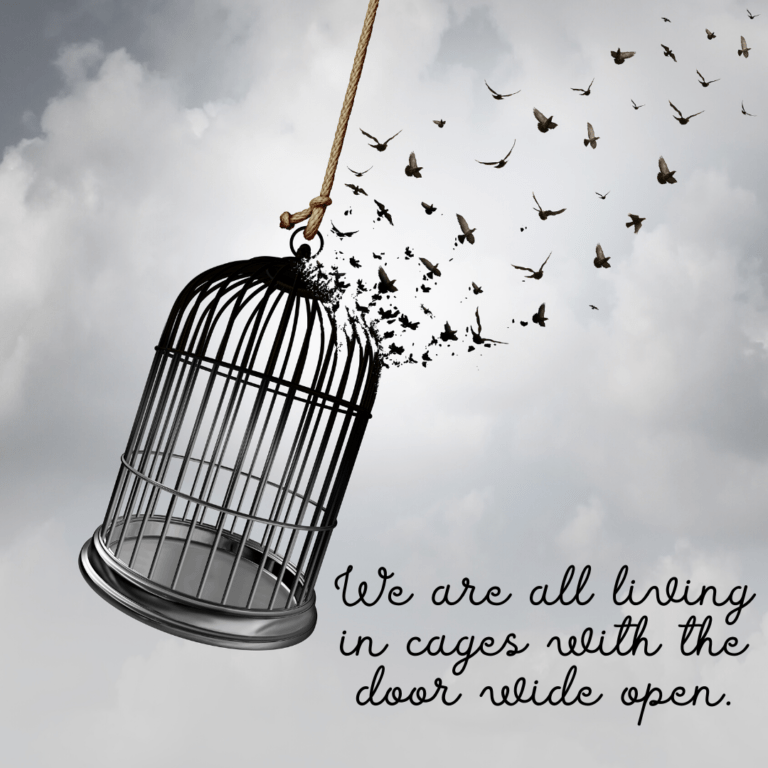
We create our own limits. Our mind can be an impenetrable prison, created by our own fears, insecurities and reasons why we believe we can’t be the person we want to be or can’t achieve something. It is a buffer we create to protect ourselves from rejection and failure. We stay in our cages on our perch, watching the world go by, safe from harm, taking no risks. Yet we were created to fly. And the door is wide open, if only we dared to step out of them.
What happens when we stay in our cages is that we don’t allow ourselves the opportunity to even try. We have all these rationalizations as to why we shouldn’t try, why it isn’t safe, and if your mind is really sneaky like mine, you can convince yourself that you don’t even want what resides outside of your cage. You see, it’s not who you are that holds you back, it’s who you think you aren’t.
Now here’s the thing about cages – they are mighty comfortable. They are known and we feel safe in them. But nothing amazing ever came from just staying in our comfort zone. Instead of focusing on what kinds of scary things might happen outside of our cages, we need to look at it like what we might be missing by staying in our cage.
We can start questioning our restricted existence in our cage, but contemplating the following:
1.) What am I fearing? Where is this fear coming from? Fear of the unknown is hardwired into our brains. We needed it for survival years ago to not get eaten by a tiger. But in our modern age, 99% of what we fear or worry about never even happens. So, understand why you may be fearing a certain situation. By doing so, you can then begin to…
2.) Develop a game plan for the worst-case scenario. Often times, what causes us anxiety is not knowing how we will handle something bad happening. But if we can rationally work out ways we can handle it, we have a plan should it happen.
3.) Accept that failure will happen and choose to look at it as experience. There is a quote that says, “I have not failed. I’ve just found 10,000 ways that it won’t work.” We define our own experience from situations by how we look at them. We can allow ourselves to feel demotivated or why can say, “plot twist” or “challenge accepted” and keep trying.
4.) Surround yourself with people who want you to succeed. It has been said that we are the sum of the five people we spend the most time with. Are the people around you negative? Do they try to talk you out of stepping out of your comfort zone? Or do they support you while you are on your own journey? Having quality people around you who truly care about you can be the encouragement you need to keep going.
Now I know what you are thinking. If you venture out of your cage today, you might fall. And it’s true, we all fall sometimes. But let’s look at it like this: what if you step out of your cage and you fly?
If nothing changes, then nothing changes. It’s like taking the same action and expecting a different result than what you get – each and every time. Change is hard, but what is harder is staying exactly where you are, in a place you have outgrown, just to feel safe. It might feel good at first, but you stay stagnant, bereft of freedom to live life on your own terms.
When you think about it, life is one calculated risk after another. Everything you do, or choose not to do, has some element of risk associated with it. We pick and choose which risks we should take without even realizing it. But on a more meaningful level, there are risks we refuse to take because we are simply scared of what will happen. But when you choose to risk nothing, you risk everything.
Let’s take a look at some ways we can begin to take more calculated risks.
1.) Be clear about your objective. Know what you really want and what the risk is if you don’t try to achieve it.
2.) Don’t wait until you feel 100% ready. If you wait until you feel 100% ready, you will never take the chance. Fear of rejection or disappointment is usually what holds us back. Start questioning it. If you ask for a raise and you get told no, what is the worst that will happen? The reality is that you will never experience things in life without taking real chances of things not going as planned.
3.) Write out pros and cons to taking the risk and not taking the risk. How will you benefit by taking the chance? What might be a good reason to hold off on making the move now? Writing out a list like this can help you organize your thoughts and put things into better perspective for you.
4.) Become friends with uncertainty. Feeling uncertain about what will happen when we choose to act can be paralyzing. But uncertainty is part of life and allows us to experience things we may not have had the chance to experience if we stayed in our comfort zone. When you feel uncertain about something, write it down and write out all your fears and worries associated with it. Then game plan on how you can address these potential issues should they arise.
5.) Surround yourself with fellow risk takers. Having friends who constantly try new things and get out of their comfort zone often can be inspiring! We see the positive effects of it, and also how they handle failure or uncertainty. And watching people overcome their hurdles inspires us and shows us that we can overcome things, too.
Just like there can’t be good without the bad, if there was no rain, there would be no flowers. What makes life beautiful is the journey that we walk during our limited time on this earth. Without struggle and hardship, we wouldn’t develop into the resourceful, capable people that we are.
When it’s raining for days in our world, we can lose sight of what comes after the storm. But what if we just allowed ourselves to fully experience the rain? What if we learned to celebrate the rain and even dance in it?
There is this feeling in the air, this scent of renewal after a rainstorm. When it has been dry outside for a while and we have a heavy rainstorm, we experience a phenomenon called petrichor. Petrichor is the earthy scent that is produced when rain hits the dry soil on the ground, resulting in a distinct earthy, pleasant smell, or what we typically call “the smell of it having rained.” What’s fascinating is that what actually causes the scent in the air is the bacteria that has taken up residency in the soil. When we have periods of no rain, microbes, such as streptomyces, produce spores in the ground. When the rain hits the microbes, the pleasant scent is emitted into the air.
The rain cleans the earth. It provides nourishment and life. And is vital to our existence, just like the rain is in our life.
Thanks for coming to Mindset Made Better. If you found this post helpful, consider signing up for our newsletter. I will never share your information. We’ll send emails a few times a week with new posts, featured videos and resources that will help make your mindset better.